Saturday, 15 September 2012

Whatever Happened to Climate Change?


I guess the earth must no longer be warming, and that CO2 emissions have stopped, because while we hear much about money and political bickering on the news, one topic that used to fill the headlines has practically disappeared. We are back in the era where I need to justify getting a low-emission car, or buying green electricity. People give me that puzzled look when I explain that I switch off my engine at traffic lights to save petrol, and when I don’t accelerate like a mad person afterwards, only to stop again a minute later. What strange behaviour on a planet that is going through the anthropocene unscathed…of course. No, climate change is as real as ever. But everyone is calm – why bother reaching an international agreement on emission reduction, while they continue to grow every year, and what’s wrong with a few more hot days for us Central Europeans anyway. And is the whole story true in the first place? Polls show increasing scepticism towards man-made climate change, the sad result of a discourse created by the lack of media coverage and European government policy. In this post I want to investigate the causes of the disappearance of climate change from the news reports, highlighting however, that climate change presents a massive threat to continued human existence on earth, and that more needs to be done.

Areas affected by a 1m sea level rise
To me it is quite obvious why the German and European political discourse of the 2000s was permeated by environmental concerns: Europe is one of the most dependent regions of the planet when it comes to energy. Fossil fuel reserves are barely available, and the vast majority of European natural gas and crude oil requirements are met by imports from Russia and the Gulf states. Awareness of immanent ‘peak oil’ and of Europe’s vulnerability to price fluctuations, made references to climate change an essential aspect of the justifications of mega-investments in energy infrastructure, particularly if one has to keep the balance between the need of increased self-sufficiency and good diplomatic relations with one’s geographical neighbours. It is difficult if not impossible to currently answer the question whether the climate change discourse was intentionally started to justify the movement towards energy self-sufficiency, but one can certainly say that it helped. In Germany, the climate change discourse became unnecessary after Fukushima – public opinion widely supported the conservative government’s plans to quit nuclear power, in spite of the move’s inevitable outcome of the large-scale transformation of landscapes. Thousands of wind turbines have been and are being constructed both on and offshore and enormous power lines are needed to transport electricity to the continent. This argument however, offers only a partial and regional explanation for the disappearance of the climate change discourse, which is not unique to Germany.

Another obvious reason for the changing discourse is the decline in public support for action against climate change. While surveys do indeed show this trend throughout Europe, in some cases quite drastically, they often suggest somewhat impartial explanation, which is why I think that the true reasons lie in an interplay of all of them. Surveys thus often cite “climategate” or financial uncertainty due to the economic crisis as the highest ranking factors in determining this alteration. Indeed, there may be some truth to both arguments. The misleading IPCC report on 2009 revealed that there were those interested in producing particular results in climate research, placing an endeavour into doubt, that’s usefulness was seen sceptically anyway. When days got cold in two consecutive European winters, public belief in climate change decreased even further, although this causal connection is very difficult to establish using statistics. Petrol prices have risen dramatically since 2009, in some cases by up to 50%, and people have become less willing to pay extra taxes to fight a problem that they are not even sure exists. The time-scales used in global climate predictions appear to be a power too high to cause rational behaviour, and humanity falls back into the dilemma where it is believed that one’s own individual actions can’t change anything anyway. The result is that the majority (albeit a smaller majority) of Europeans continue to believe in man-made climate change, although they feel unwilling or unable to do anything about it. Fortunately, the world is organised into larger political units that can circumvent the aforementioned coordination problem, yet the public inertia is mirrored in the world of international relations, where China blames Europe, where Europe blames America, and where Americans don’t really care in the first place. So, everyone!, let’s carry on blasting CO2 into the Earth’s atmosphere, because there just isn’t anything we can do. Let’s just wait and see what happens.

Webcam image of the melting North Pole, 22 August 2012
Well, I’ll tell you what happens. In the last couple of days, the Arctic ice cover has shrunk to the smallest extent ever recorded. While the average ice cover for the 1980s was something like 8 million km², it has now dropped to 3.4 million km², breaking the previous record of 2007 by over 500,000km²  - the size France. The 2000s were by far the warmest decade on record, and atmospheric CO2 concentrations have risen by 70% since the beginning of industrialisation. Climate change has by no means lost its relevance; it is happening, and foresters and farmers all over the world can already tell the difference. I am sceptical that globally coordinated action will really come about, although that would obviously be the only way to accomplish a change. I am somewhat more optimistic about Europe itself, which seems to be on track for reducing its own CO2 emissions, although perhaps with a rather non-altruistic motive. I’m going to end this post with a line from a song by Die Fantastischen Vier, which translates into this: “Put all the blame on us; you can keep all the other stuff!”

Harald Köpping


PS. If you want to support us, “like” our Facebook-page.

PPS. If you want to write your own post, send it to eutopiablog@gmail.com

Tuesday, 11 September 2012

Ein großer Schritt: Warum wir die Raumfahrt brauchen


Wenn ihr die Bibel lest, kennt ihr vielleicht einen Vers aus dem Buch der Sprüche (29, 18): „Wo keine Vision ist, wird das Volk untergehen.“ Dieser Blog soll kein Bibelkommentar sein, aber ich muss doch zugeben, dass der gute König Salomon eine wichtige Wahrheit über den Menschen verstanden hat: wir brauchen eine Vision, eine Offenbarung, ein métarécit, um uns voranzutreiben, um das menschliche Genie zu entzünden. Jede Nacht blicken Menschen aus aller Welt in den gleichen Himmel, sehen den gleichen Mond und die gleichen Himmelskörper. Der Blick nimmt uns manchmal fast den Atem, und ich kann mir kaum vorstellen, was wohl durch die Köpfe unserer fernen Vorfahren ging, als sie allnächtlich dieses Spektakel zu sehen bekamen. Die NASA-Sonde ‚Curiosity‘ (zu Deutsch, ‚Neugier‘), könnte keinen passenderen Namen haben, denn so viel in unserer Kultur haben wir dieser einzigartigen Eigenschaft zu verdanken, ohne jene wir uns wohl kaum wiedererkennen würden. Wie der französische Philosoph Lyotard jedoch vorhergesagt hat, sind wir inzwischen von einer Flut digitaler, quantifizierter Informationen bedroht, und rationales Verhalten ist oft gleichgesetzt mit Egoismus, vielleicht das dunkelste menschliche Laster. Der Entdeckergeist geht immer mehr auch aus unseren Raumfahrtprogrammen verloren, und alles muss eine ‚rationale‘, wirtschaftlich motivierte Begründung haben, um legitim zu werden. Tiefere Fragen über die Legitimierung werden nicht gestellt. Uns wurde erzählt, dass das menschliche Leid auf der Erde uns dazu anregen sollte, all unsere Kraft hier auf der Erde einzusetzen, anstatt sie für Science-Fiction-Abenteuer im Weltraum zu verschwenden. Ich möchte diese Annahme in Frage stellen, und hoffe euch zeigen zu können, das dieser Appell an unser gemeinschaftliches Gewissen nicht nur fehlgeleitet, sondern auch gefährlich ist.

ExoMars (2014) schwenkt ein in den Marsorbit
Im Jahr 2009 bezahlte jeder Europäer aus einem ESA-Mitgliedsstaat €8,64 für das Raumfahrtprogramm, während jeder Amerikaner immerhin $57,54 der NASA zur Verfügung stellte.Das derzeitige ESA-Budget von ungefähr €4 Milliarden reicht allerdings aus, um Sonden zum Mars, zur Venus, und zum Kometen 67P/Churyumov-Gerasimenko zu schicken; mit relativ wenig Mitteln ist also schon relativ viel möglich. Für eine bemannte Mission zum Mars allerdings, bräuchte man eine ganz andere Dimension der Finanzierung. Robert Zubrin und David Bakers Vorschlag für die Entsendung von vier Astronauten zum roten Planeten (siehe Mars Direct) würde mindestens €50 Milliarden verschlingen, verteilt über ein Jahrzehnt. Konservative Schätzungen gehen sogar von €500 Milliarden aus (naja, eigentlich sind wir ja solche Zahlen längst gewöhnt...). Der Weltraum ist teuer, da kommt man nicht drumherum. Um allerdings zu verstehen, warum das Problem kleiner ist als es aussieht, muss man sehen wie diese Kosten eigentlich entstehen.

Man könnte denken, dass die hohen Energiekosten die Preise in die höhe treiben, aber dem ist nicht so. Nehmen wir also an, es kostet €10.000 um ein Kilogramm Ballast in die Erdumlaufbahn zu befördern, was wiederum 50 Liter Kerosin benötigt, dann kommt man so nur auf €50 pro Kilo. Was also einen Start teuer macht, sind die Materialkosten für Raketen, deren eingeschränkte oder nicht vorhandene Wiederverwendbarkeit, und die hohen Entwicklungskosten, also die Mitarbeitergehälter und die Technologieentwicklung, welche aus genannten Gründen doch recht kostspielig ist. Jedoch muss man wissen, dass nur 2,7% des aktuellen ESA-Budgets für die unbemannte Erforschung des Sonnensystems ausgegeben werden. 8,8% und 15,1% werden jeweils der bemannten Raumfahrt und der Raketenentwicklung gewidmet. Der Großteil des Geldes gilt Dingen wie Navigationssystemen und Erdbeobachtungssatelliten. Ein Blick auf das NASA-Budget bestätigt diesen Eindruck. Im Grunde gibt Europa also nur €500 Millionen im Jahr für die Erforschung des Weltalls aus, welche unser Entwicklungshilfebudget nicht mal um 1% ansteigen ließe. Verglichen mit Bildungs- und Gesundheitsausgaben besitzt dieses Geld kaum Relevanz.

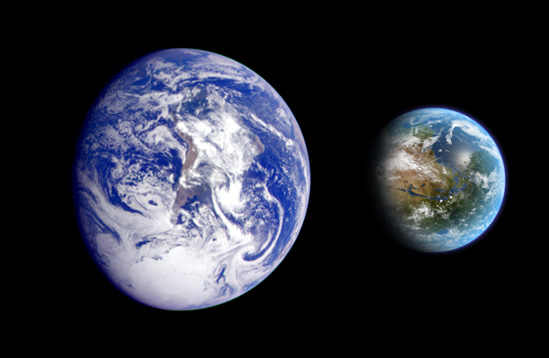
Der Mars könnte zur zweiten Erde werden
Ich muss dennoch etwas noch Wichtigeres sagen. Geht es bei der Verbesserung der Lebensverhältnisse auf der Erde wirklich um Geld? Weltraumtechnologien haben immens dazu beigetragen menschliches Leid zu verringern (in Form von Wettersatelliten, Navigationsdiensten, Erdbeobachtung, Katastophenmanagement, etc.), und Geld selbst baut keine Schulen und Krankenhäuser. Unser Planet leidet nicht an Ressourcenknappheit, sondern an einem Verteilungsproblem. Geldmangel ist eine künstlich erzeugte Knappheit, erzeugt durch unseren blinden, schon fast religiös anmutenden Glauben an das monetäre System. Es ist jedoch so, dass wir theoretisch all unser Geld verbrennen könnten, ohne, dass es der Welt dadurch besser oder schlechter ginge. Schließlich sind es Menschen die Schulen und Krankenhäuser bauen und verwalten müssen! Ein Budget für die Erforschung des Weltraums das ein Zehnfaches höher ist als das Jetzige wäre mühelos zu erreichen, und nicht ein Mangel an Ressources verhindert dies, sondern mangelnde öffentlich Unterstützung. Wie so oft benötigen wir internationale Koordination, um Duplikation zu verhindern und um Kooperation zu stärken. Eine Fusion aller Raumfahrtbehörden zu einer Weltraumfahrtagentur würde uns die Möglichkeit bieten mit der Besiedlung des Mondes und des Mars noch in diesem Jahrzehnt zu beginnen. Europa könnte dabei eine besonders wichtige Rolle spielen, da es schon über viele Jahre Erfahrungen auf dem Gebiet der internationalen Zusammenarbeit gesammelt hat.

Es sind durchaus ethische Probleme mit der Erforschung des Weltalls verbunden (diese sind meißt an ökologische Bedenken geknüpft, die bei der Kontamination fremder Planeten mit irdischem Leben eine Rolle spielen), doch das Argument, dass der Weltraum nicht wirtschaftlich ist, führt in die Irre. Es verleitet uns zu dem Gedanken, dass Geld selbst Menschen ernähren kann, welcher von der Wahrheit nicht weiter entfernt sein könnte. Dieser Gedanke ist gefährlich, denn was wir wirklich brauchen ist eine gerechte Ressourcenverteilung. Die Ressourcen, die für das Weltraumprogramm verwendet werden, würden den Hunger nicht beseitigen, doch politische Institutionen wie die WHO geben den industrialisierten Ländern einen Wettbewerbsvorteil, der die Kluft zwischen Armen und Reichen immer breiter werden lässt.  Ungerechtigkeit muss zunächst auf dem politischen Level bekämpft werden (worüber wir ja in vielen Posts berichtet haben), und nicht mit Einschnitten im Weltraumbudget die Wählerstimmen bringen sollen.

Die Zukunft der Menschheit liegt unausweichlich im Weltraum. Zukünftige Generationen werden mit von uns ungeahnten Ausmaßen von Überbevölkerung und Rohstoffknappheit zu kämpfen haben, und die Existenz der Menschheit auf nur einem Planetan birgt ein ständiges Risiko der Vernichtung (sei es durch eine Seuche, einen Atomkrieg oder einen Asteroideneinschlag, um nur ein paar Szenarien zu nennen). Das SETI-Programm hat bisher nur wenige Resulate geliefert, und nach jetzigem Kenntnisstand sind wir im Universum allein – wir sind sein einziges Bewusstsein, und es wäre unverantwortlich das Bewusstsein des Universums auf einem einzigen Planeten zu lassen. Der Mars ist gleich nebenan, und die Kolonisierung des Sonnensystems ist bereits mit heute verfügbaren Technologien machbar. Das ESA-Programm Aurora ist ein ehrgeiziges aber unterfinanziertes Projekt, das bis zum Jahr 2035 Menschen auf den Mars bringen soll, und das dessen Besiedlung in den 2040er Jahren einleitet. Mindestens 25% des ESA-Budgets sollte zu diesem Zweck verwendet werden. Im Moment werden 19% zum Bau eines sinnlosen Satellitennavigationssystems eingesetzt, welches ein bereits exisitierendes amerikanisches System dupliziert. Würde man die Budgets von NASA, ESA und ROSKOSMOS zusammenlegen, wäre eine bemannte Mission zum Mars im Jahr 2022 absolut realistisch. Keine Vision vermag uns mehr zu inspirieren als der Weltraum, und wenn die Menschheit überleben will, müssen wir dieses Ziel mit aller Kraft verfolgen.

Harald Köpping

PS. Wenn ihr uns unterstützen wollt, klickt ‚gefällt mir‘ auf unserer Facebook-Seite.

PPS. Wenn ihr euren eigenen Post schreiben wollt, schickt ihn einfach an eutopiablog@gmail.com

Monday, 3 September 2012

A Giant Leap: Why its good to go to space


For those of you who know their Bible, you might know an important verse in Proverbs 29:18: “Where there is no vision, the people perish.” While this blog is no biblical commentary, good old King Solomon nevertheless understood an important truth about human nature; we need a vision, a prophecy, an ideology, a ‘grand narrative’ to drive our endeavours, to ignite the human genius. Every night human beings around the planet see the same sky, the same moon and the same celestial bodies. That view leaves us awe-struck, and I can only imagine what went through the minds of our distant ancestors who knew nothing of astronomy and physics. NASA’s probe ‘Curiosity’ could not have a more fitting name, because so much of our culture is the product of that uniquely human quality, without which we would find ourselves unrecognisable. However, as the French philosopher Lyotard predicted, we have allowed ourselves to be drowned in the flood of digitised, quantifiable knowledge, and rational behaviour has become equated with selfishness, perhaps the nastiest of human vices. The spirit of exploration is disappearing from our space programmes, and everything must have a so-called ‘rational’, economically driven motive to be held legitimate. Deeper questions about legitimation are disregarded, particularly those about the legitimation of the legitimators. We have been told that human suffering on earth should cause us to focus all our energies on this planet, rather than on the pursuit of science-fiction adventures in space. I want to question this assertion, and I hope to show you that to appeal to our collective conscience is misguided and possibly dangerous.

ESA probe approaching Mars
In 2009, each European from an ESA member state paid €8.64 on the space programme, while each American paid $57.54 to NASA. The current ESA budget of €4 billion is sufficient to finance dozens of missions, among them probes to Mars, Venus, and the comet 67P/Churyumov-Gerasimenko. So, with a relatively small amount of money, quite a lot is possible. A manned mission to Mars however, would require an entirely different level of financing. Robert Zubrin and David Baker’s proposal of sending four astronauts to the Red Planet (see Mars Direct) would cost around €50 billion over a period of 10 years, while more conventional estimates for such a project easily reach €500 billion. Going to space is expensive; there is no way around that. The key to preventing you from thinking that this money could better be used to tackle problems here in Earth is an understanding of why space is so expensive.

You might think that it’s the energy costs that cause the problem, but this is certainly not the case. Let’s say it costs €10,000 to place one kilogram of material into orbit (admittedly a high estimate), requiring 50 litres of kerosene, costing about €1 per litre, then this accounts for merely €50 per kilogram. What makes launch costs high are the materials needed to construct rockets, the non-reusability of rockets, and the development costs. The latter refers to both paying staff and to trying out new technologies, which for the aforementioned reasons is quite expensive. However, it is very important to understand that in the current ESA budget, robotic exploration accounts for a mere 2.7%. Human spaceflight and launchers account for 8.8% and 15.1% respectively. The vast majority of money is spent on stuff like navigation systems and earth observation. A quick glance at the NASA budget confirms that impression. Effectively, Europe spends about €500 million a year on space exploration, which, if spent on development aid, would increase Europe’s development budget by a mere 1%. The money spent on space is insignificant when compared to healthcare or education.

Earth and terraformed Mars:
humanity's future on two planets
However, I have a point to make that is even more important. Is improving the state of affairs in the world really about money? Space technology has contributed massively to decreasing human suffering (weather satellites, navigation services, earth observation, disaster management, etc.), and money itself does not build schools and hospitals. This planet is suffering not from a lack of resources. A lack of money is artificially created scarcity, caused by our blind belief and religious adherence to the monetary system. If we burnt all our money, no resource would have disappeared. My point is that it is human beings that have to build and operate schools and hospitals, and that resources on this planet are not scarce, but unevenly distributed. A budget for space exploration that is ten times higher than the one we have now would easily be achievable, for it is not the lack of resources that prohibits it, but a lack of political will and public support. As so often, we are confronted also with a need for international coordination, preventing duplication and encouraging cooperation between the space-faring countries. A merger of all space agencies into a World Space Agency would allow for the colonisation of the Moon and Mars to begin in this decade. Europe can play a particularly important role in facilitating such cooperation, because ESA is the prime example of a successful international space programme.

There are ethical problems with going to space (mostly related to environmental arguments about the contamination of other planets with earth life), but the economic argument is certainly misleading. It makes us think that money itself feeds people, which could not be further from the truth. It is, in fact, a dangerous idea, because what is really required is the equal distribution of resources. The resources used on the space programme would not benefit people who are suffering, but the political institutions that enforce ‘free trade’ such as the World Trade Organisation give industrialised countries a competitive advantage that will forever deepen the gap between rich and poor. The cure for injustice is to be sought largely at the political level (as we discuss in various posts), and not in cutting space budgets for the mere reason that they no longer secure votes.

It is inevitably the destiny of humanity to go into space. Future generations will struggle with overpopulation and resource depletion to an extent that is completely unimaginable to us at this time. Existing on one planet implies the constant threat of extinction (epidemic, nuclear war, asteroid impact are but a few scenarios). SETI has had no results so far, and as far as we know, we are alone in the universe – we are its only consciousness, and it would be irresponsible to keep the consciousness of the universe on a single planet. Mars is just next door, and the colonisation of the solar system and nearby stars is technologically very feasible. ESA’s Aurora programme is an ambitious but underfunded project, intended to bring humans to Mars by 2035, and to begin colonisation in the 2040s. At least 25% of the ESA budget should be devoted to this end. At the moment, 19% are spent on building an unnecessary satellite navigation system that duplicates the already existing GPS. Combining the budgets of NASA, ESA, and ROSKOSMOS would make a manned mission to Mars feasible by 2022. No vision has a stronger appeal than space, and if humanity is to flourish we need to pursue this vision.

Harald Köpping


PS. If you want to support us, "like" our Facebook fanpage.

PPS. If you want to write your own post, send to it eutopiablog@gmail.com

Friday, 31 August 2012

Eine Endlose Ebbe - Neues aus Griechenland


Nach drei Wochen in Griechenland, verspüre ich den Drang all das aufzuschreiben was ich dort gehört und gesehen habe. Natürlich bin ich hier besonders den deutschen Medien ausgeliefert, und obwohl das zweifellos einen gewissen Einfluss auf mich hat, glaube ich trotzdem, dass ich mein Bestes getan habe die Dinge kritisch zu sehen, und nicht jeden Mist den die Bildzeitung gerade über die Griechen druckt naiv zu schlucken. Es war ja eigentlich die Wut über die schamlosen Lügen über die Finanzkrise die uns dazu bewegt hatte diesen Blog zu schreiben. Lasst uns also dahin zurückkehren, und darüber reden welchen Eindruck Griechenland auf einen Gast aus Leipzig machte.

Während die deutschen Medien im Chor Faulheit und Korruption als Ursachen der griechischen Tragödie ausgemacht haben, haben die griechischen Medien ihrerseits die wahren Wurzeln der Krise benannt. Die Wut über vergangene und gegenwärtige griechische Regierungen wird nur durch die Wut auf Deutschland und seine Politiker übertroffen. Aus mir rätselhaften Gründen, sehen sowohl griechische Fernsehsender als auch Tageszeitungen Deutschland als Erzschurken Europas, und deshalb auch als einen der Hauptgründe für die Verarmung der Bevölkerung. Sie ignorieren dabei dass die Forderungen der Kommission sich von den Deutschen kaum unterscheiden. Oft haben mich Leute gefragt wo ich her komme, und jedes Mal drehte sich bereits vor meiner Antwort bei mir der Magen um, wohlwissend welche Gedanken durch die Köpfe gehen würden, nachdem ich ‚Deutschland‘ gesagt habe. Ein Taxifahrer brachte es auf den Punkt, als er (humorvoll) antwortete: „Aha, dann bist du also der Feind!“

Eins der vielen verlassenen Geschäfte
in der Innenstadt Nafplios
Etwas anderes dass mir aufgefallen ist, war der unterschwellige Nationalismus, den ich als Deutscher wahrscheinlich besonders bemerkt habe. Die Nationalflagge, die an jeder Straßenlaterne, jedem Kiosk, und von vielen Balkonen hängt, erinnerte mich an die amerikanische Welle des Ultrapatriotismus, die wir in Europa so verstörend fanden. Ich hatte den Eindruck, dass Griechenland im Moment das gleiche Syndrom durchlebt, denn es ist zu einem Land geworden, wo die griechische Flagge auf dem Etikett ein Werbemechanismus ist. Ich kann natürlich verstehen warum man in Krisenzeiten Produkte aus dem eigenen Land kaufen will, aber ich halte es dennoch für bedenklich an einen Laden zu schreiben: „Wir verkaufen nur griechische Waren!“ Neben dem Nationalismus stört mich daran aber noch etwas anderes. Die Idee, dass man durch leicht verändertes Konsumverhalten das Land aus der Krise führen kann erweckt den Eindruck, dass die Verantwortung für alles Übel bei den einfachen Griechen liegt die früh in die Bäckerei gehen und Tiropites kaufen. Nein, die Verantwortung liegt bei denen die seit Beginn der Krise 2009 monatlich 4 Milliarden Euro außer Landes gebracht haben um den Steuern zu entgehen; diese Menschen verachten ihr Land, und deren Geld hätte so viel zur Lösung der Situation beitragen können. Verantwortung liegt bei den Banken, die Griechenland billige Kredite gegeben haben, und bei den korrupten Regierungen.

Die griechische Krise ist überall mit bloßem Auge sichtbar, besonders in den Touristenhochburgen. Wir haben in der Hauptstadt von Naxos mit einem Restaurantbesitzer gesprochen, der uns erzählte, dass seit 2009 jedes Jahr weniger Touristen auf die Insel kamen, und dass 2012 absolut katastrophal gewesen sei. Ich sah die einst mit Menschen gefüllte Innenstadt von Piräus verwahrlost und verlassen. Überall waren Aufkleber mit der Aufschrift ‚ENOIKIAZETAI‘ (zu vermieten), und viele Schaufenster waren zugeklebt oder vernagelt. Als ich 2008 Nafplio besuchte, fand ich eine kleine Stadt voller Leben, während dieses Jahr weit und breit kein Mensch zu sehen war. Die griechischen Benzinpreise können inzwischen mit Skandinavien mithalten, und durch die stark gefallenen Löhne, wurde in wenigen Jahres aus Normalität Luxus.

Ich möchte diesen Post mit einem Appell beenden: wenn ihr im September noch Last-Minute in den Urlaub fahren wollt, fahrt nach Griechenland, und helft den Leuten die Finanzspekulation zum Opfer gefallen sind. Ich kann bestätigen dass Naxos eine traumhafte Insel ist, mit goldenen Stränden und gastfreundlichen Menschen. Griechenland lebt auch vom Tourismus, und es gibt tausend gute Gründe seine unzähligen Inseln zu besuchen. Also auf nach Hellas!

Harald Köpping

PS. Wenn ihr uns unterstützen wollt, klickt 'gefällt mir' auf unserer Facebook-Fanseite.

PPS. Ihr könnte euren eigenen Artikel schreiben, und ihn an eutopiablog@gmail.com schicken.

Thursday, 30 August 2012

An Endless Ebb – Update on the Situation in Greece


After three weeks in Greece, and after the previous posts of the refugee crisis, I feel the need to write down what I’ve seen and heard in that country. The media in Germany are what I am exposed to the most, and while it is doubtless that they have had a certain amount of influence on me, I still think that I have done my best to view things critically, and to not swallow every bit of slander that the infamous BILD has attempted to spread about the Greeks. Anger at those false portrayals of a lazy people and at the reckless lies that worsen the crisis are what got this blog started in the first place, so let’s get back to that, and talk about what Greece was like through the eyes of a guest from Leipzig.

While German media was consensually identified laziness, foul play and corruption as the ultimate origin of the Greek tragedy, the Greek media have on their part seemingly pointed out the true roots the mess. Anger at past and present Greek governments is only matched and possibly surpassed by anger at Germany and its politicians. For reasons that are quite unclear to me, both Greek TV stations and newspapers see Germany as the chief villain of Europe, and thus also as a main cause of the current impoverishment of the population, ignoring that the demands of the conservative government are not very different from those of the Commission. I was often asked where I was from, and every time my stomach started twisting before I said ‘Germany’, knowing what would go through people’s minds as soon as they heard the answer. One taxi driver hit the nail on its head, when he (albeit jokingly) responded, “Ah, so you are the enemy!”

Abandoned shops in the old city of Nafplio
Another thing that struck me was a nationalist sentiment that I, as a German, am probably particularly sensitive to. The national flag hanging from every lamp post, every kiosk, and lots of balconies was something that Europeans found so disturbing when the US suffered its own wave of ultra-patriotism after 9/11. I was under the impression that Greece is experiencing the same syndrome, a country where the presence of a Greek flag on a product is a marketing mechanism. Of course, I understand that in times of crisis people want to buy products made in their own country, probably I would do the same, but is it really a good idea to put a sticker on your shop that proudly proclaims, ‘We only sell Greek products’? Apart from the nationalism there is something else that bothers me about the idea that a slightly altered shopping behaviour can make a difference. This idea delivers the message that responsibility for the crisis ultimately lies with the ordinary people who go to the bakery to buy tiropites. Responsibility lies with people who have brought 4 billion euros outside the country every month since 2009 – the people who did that hate their country, and their money could have done so much to help the situation. Responsibility lies with the banks who have given Greece cheap credit in the first place, and responsibility lies with corrupt governments.

The crisis in Greece is certainly visible to the naked eye, particularly in the tourist destinations. We spoke with the owner of a restaurant in the main city of Naxos, who told us that since 2009 there has been a steady decline in tourists, and that in 2012 their income has plummeted particularly. I saw the once-crowded city centre of Piraeus derelict and abandoned, stickers reading ‘ΕΝΟΙΚΙΑΖΕΤΑΙ’(which means ‘for rent’) everywhere, nearly empty cafés and the boarded windows and doors of closed shops. Last time I went to beautiful Nafplio in 2008, I found a small town bustling with life, while this year’s visit showed Nafplio as a depressingly empty place. With petrol prizes competing with Scandinavia, and with incomes having plunged, things that used to be normal have become luxuries in a matter of a few years.

So, I want to end this post with an appeal: if you are reading this planning to go on a last-minute holiday in September, I urge you to go to Greece (I can confirm that Naxos as an amazing island, with golden beaches and great, hospitable people), and to help people who have become victims of financial speculators. Tourism is one of the main sources of income for Greece, and there is absolutely no reason not to visit its hundreds of beautiful islands.

Harald Köpping


PS. If you want to support us, like our Facebook fanpage or become our follower.

PPS. Write your own post and send it to eutopiablog@gmail.com

Tuesday, 7 August 2012

"If nothing matters, there is nothing to save" - Immigration in Greece


For me, what is worse is the mainstream discourse that surrounds the immigration issue. Today a member of the government stated that Greece has reached its limits and that illegal immigration is bringing Greece to the edge of collapse.* At the same time, the headlines of major newspapers referred to the government’s “epixirisi skoupa”, the hoover operation. It is amazing that from this word alone we can already deduce so many things. The government is cleaning up the country, putting the garbage away. The easiness with which people are dehumanised has always struck me. It then does not matter what the conditions in the camps are or how refugees are sent back to their countries. Nothing matters except the fact that they have to disappear. What is even more worrying is that it is not Chrisi Avgi that I am talking about but the Greek government. I am talking about parties of the centre having this kind of discourse, as if the refugees are the reason the crisis came in the first place. The government is stigmatizing these people because they are an easy target, because they have no legal rights and no possibility to make their voice heard. The government is stigmatizing them because they are clearly identifiable whereas those who are really responsible for the crisis are not easily distinguishable; because it is easier to blame a Pakistani than to blame the corrupted civil servant or the tax evador. It is easier to blame them than to blame us.

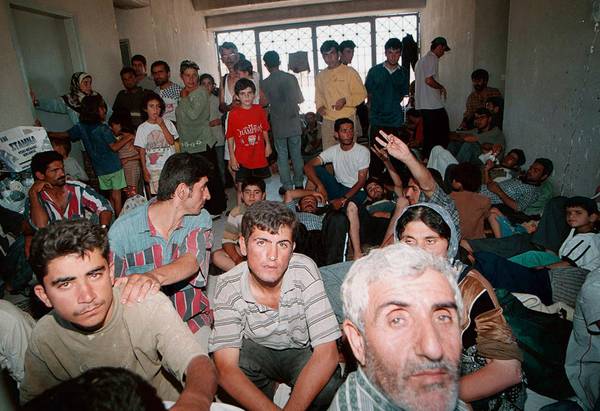
Immigrants in Greece
In Greece there is a crisis this is undeniable, but stigmatizing and chasing people who are poorer and worse off than you, and then asking other European governments to show solidarity, is hypocritical. This applies to the individual level as well; how can you ask others to show solidarity with you, if you consider people who risked their lives more than once to come here garbage? I would like to quote Jonathan Foer in his book Eating Animals: “If nothing matters, there is nothing to save.” Human rights and moral standards are not concepts that you can stretch and bend as much as you like and require. There is not a morality that is suitable for good times and another that you can apply in times of crisis, because then there are no more moral standards. It is even worse if you consider the fact that the majority of people here proudly call themselves Christians. If I recall correctly Jesus said “love your neighbour as you love yourself”. I always thought that it is in times of crisis that you can see the best and the worst of people and societies.  For now I have seen the worst. Now I hope for the best.

Alexandra Athanasopoulou

*That Greece is on the edge of collapse is ridiculous – EU funds for the improvement of the situation in the refugee camps have been available for months, but the Greek government is not using them.

PS. If you want to support us, become our follower or like our Facebook-Page.

PPS. If you want to support us even more, write your own post and send it to eutopiablog@blogspot.com

"Illegal Immigration"? - After One Week in Greece...


I have spent one week in Greece, and the heat, the good food and the sea have nearly let me forget that this is the country that finds its way into Europe’s news reports every day because of an economic crisis that is paralysing the continent. The cafés are a little less crowded than usually, many restaurants are empty, some shops have had to close, but I found the city centre of Athens to be bustling as ever (with tourists and locals alike). Yes, one can tell that there is an economic crisis, if one knows what signs to look for. What no tourist, no local, no human being can ignore, is a dark-skinned man fishing old tin cans out of a stinking garbage bin, placing them carefully into a shopping trolley. Writing my PhD on Europe’s asylum policy, I approached him, hoping that he could tell me what life is like for him in Greece. He smiled at me, told me he was from Pakistan, but that he didn’t speak English. He pulled a cell phone out of his pocket, and called a friend of his, passed me on to him. I explained what I wanted, but that it would be difficult for us to talk if he didn’t speak English. Not really knowing what to do next, I shook his hand, said goodbye, and wished him a blessed Ramadan.

1,600 refugees were detained by Greek authorities yesterday
I sometimes wonder what it is like to cross the Greco-Turkish border illegally, as around 100,000 people do every year, but if I tell someone that I want to attempt doing so myself, they will say that it is too dangerous, that you can get arrested, or worse. There are those for whom crossing that border is not part of their PhD research, or for whom it is not the topic of a good blog post, but who see it as the only way to secure a future for themselves and their families. They arrive here, in Europe, and are labelled illegal immigrants, not worthy of human dignity, left to collect the garbage off the streets, or out of the trash cans. There are a million ‘irregulars’ in Greece, 10% of the country’s population, most of them homeless, or crammed together in hopelessly overcrowded refugee camps, which are the worst in Europe. Racism is visible in this country, be it in the Pakistani ghettoes in Athens or in the news reports, where I have heard 101 times that the rapist was indeed Pakistani (does it really matter where he’s from?).

Let me tell you something: Accusing someone of illegal immigration is very much like accusing someone of having crossed a red traffic light that never turns green. It is impossible to apply for asylum in Greece; the success rate is something like 0.01%. However, it is also impossible to apply for asylum in another EU Member State. Greece has become a victim of the Dublin II Regulation, which states that asylum seekers have to apply for asylum in the country where they first entered EU territory. Due to its geographical location, this puts Greece in a bad position. The racism that has resulted from a totally incompetent handling of asylum applications reinforces the concept of the Fortress Europe, which foresees the building of ever-higher fences and walls around the continent. Dublin II is one of the corner stones of Fortress Europe (see this previous post for more). This is thus a call for a reform of Dublin II, and also an appeal to be sensitive to people who have given up everything to reach Europe. Europe is only good as it treats its poorest, and judging from that, I am not sure I see much good in it right now.

Harald Köpping

PS. If you want to support us, become our follower or like our Facebook-Page.

PSS. If you want to support us even more, write your own post and send it to eutopiablog@gmail.com